Yala's leopards get the headlines, but the block-three hornbills are the park's quiet, prehistoric soul.
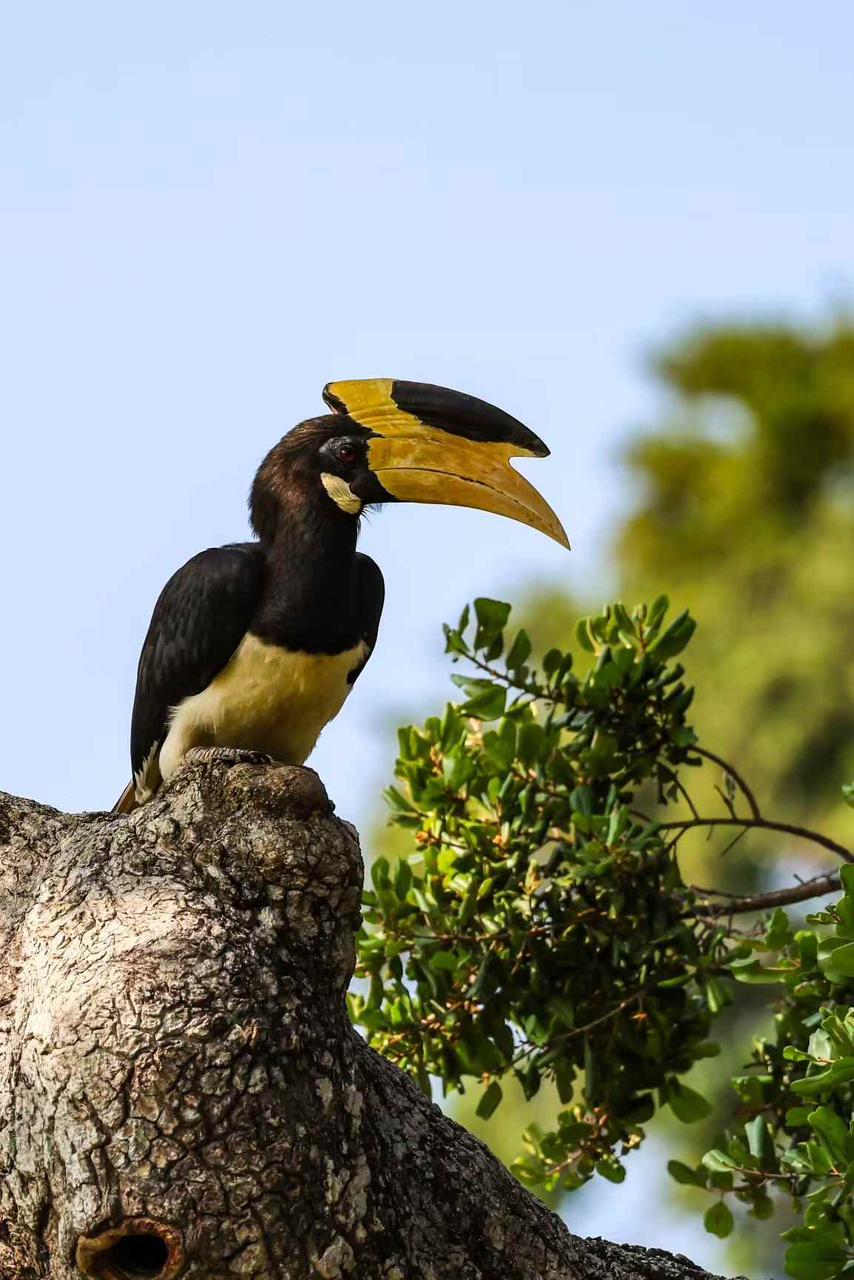
Everyone comes to Yala for the leopard. We understand. The big cats here are the densest in the world and there is no shame in wanting to see one. But if you have ever stood under a fruiting fig and watched a Malabar pied hornbill arrive — that slow, heavy whoosh of wings, the absurd yellow casque against a faded sky — you know there is more than one headline animal in this park.
Hornbills are old in a way the cats are not. Watching one preen on a kumbuk branch feels like watching a creature that wandered out of a different geological chapter and forgot to leave. The pair we know best work a stretch of riverine forest in Block 3, the quieter side of the park, where the safari traffic thins out after lunch.
Where and when to look
Hornbills follow fruit. Find a fruiting banyan or fig and you have probably found your bird. Mid-morning, once the heat starts to lift the haze off the river, is the most reliable window. They are loud — a barking, laughing call that carries across the canopy — so you will often hear them before you see them.
If the female is at a nest cavity, the male will be making short flights back and forth with food. The female seals herself inside the hollow with mud and her own droppings during the breeding season, leaving only a narrow slit for the male to feed through. It is one of the strangest, most committed parenting arrangements in the bird world, and you can sometimes catch it from a respectful distance on the afternoon drive.
We bring a 400mm lens, plenty of water, and we keep the engine off. The hornbills will tell you when they have had enough of being watched.