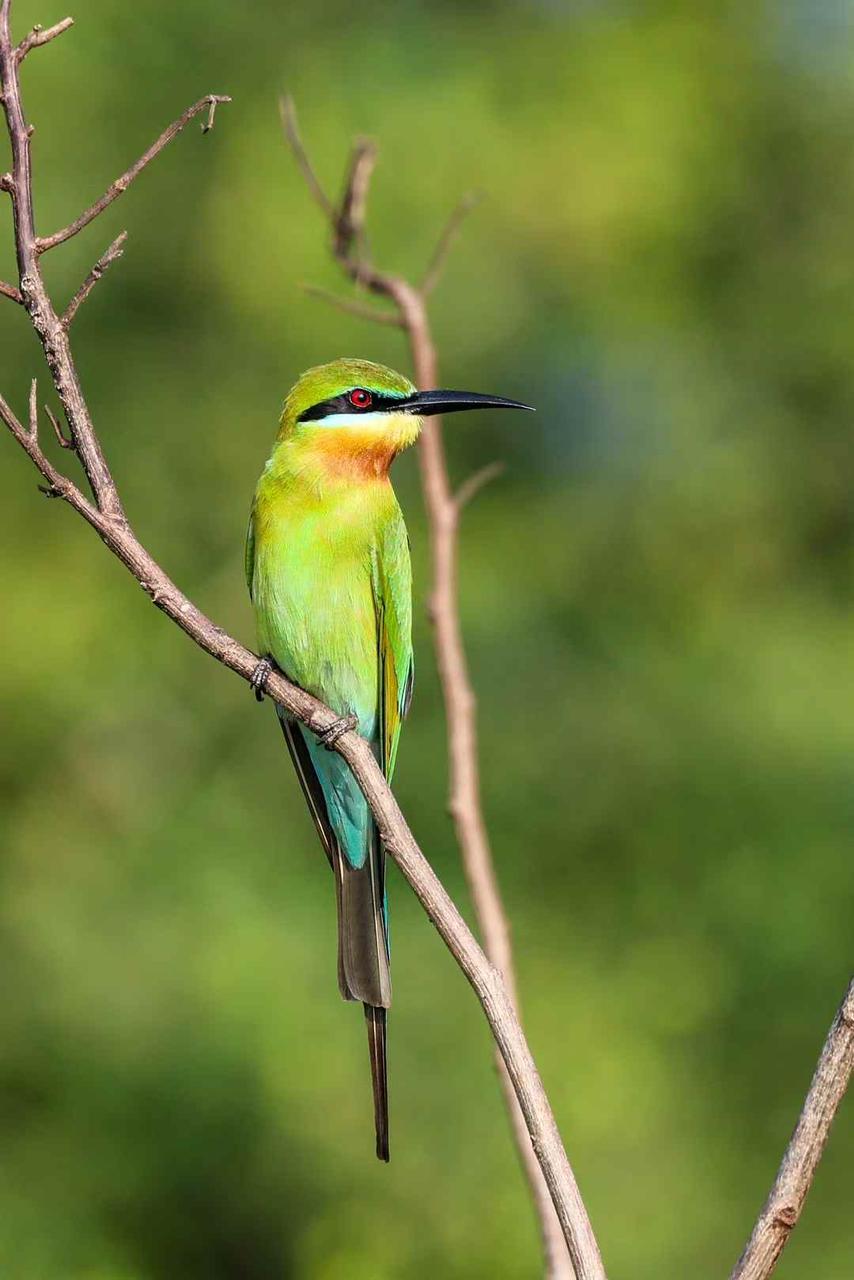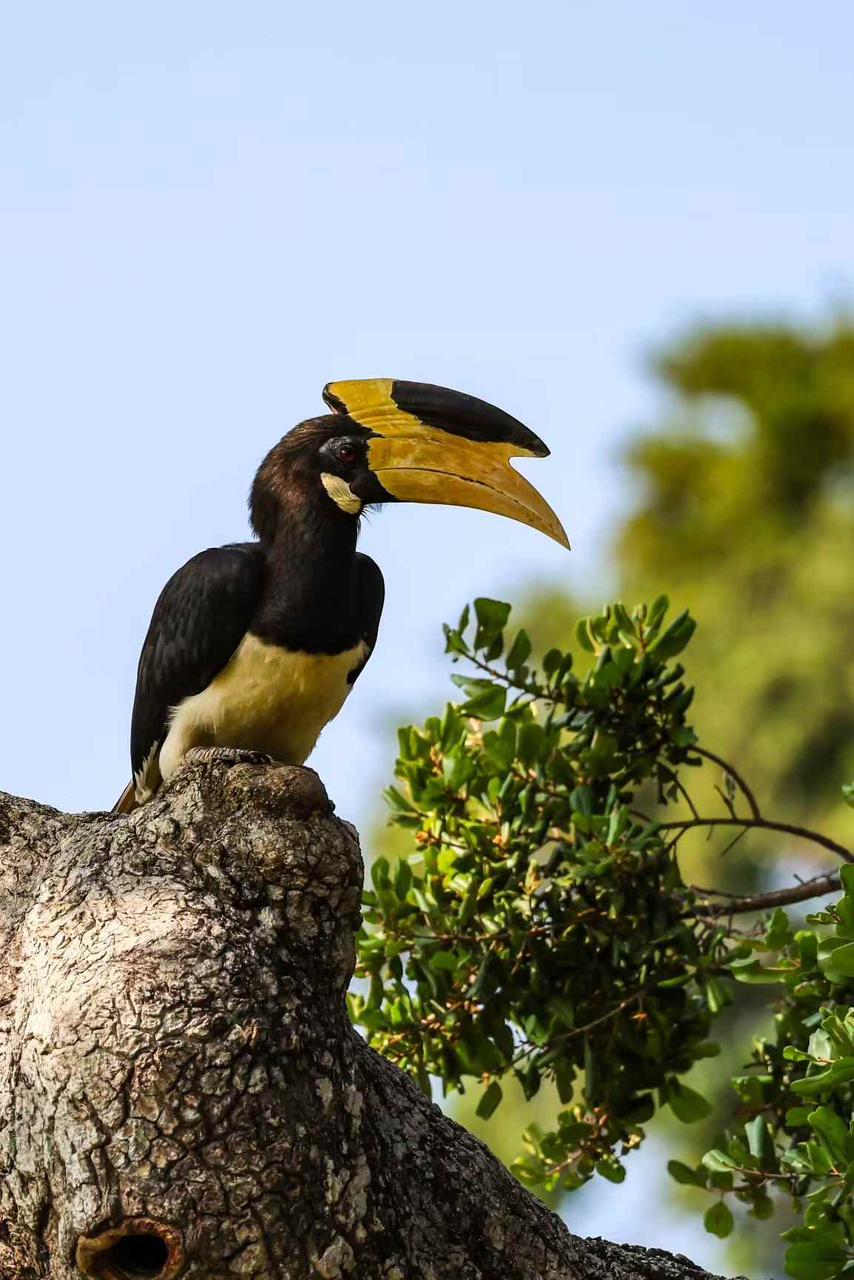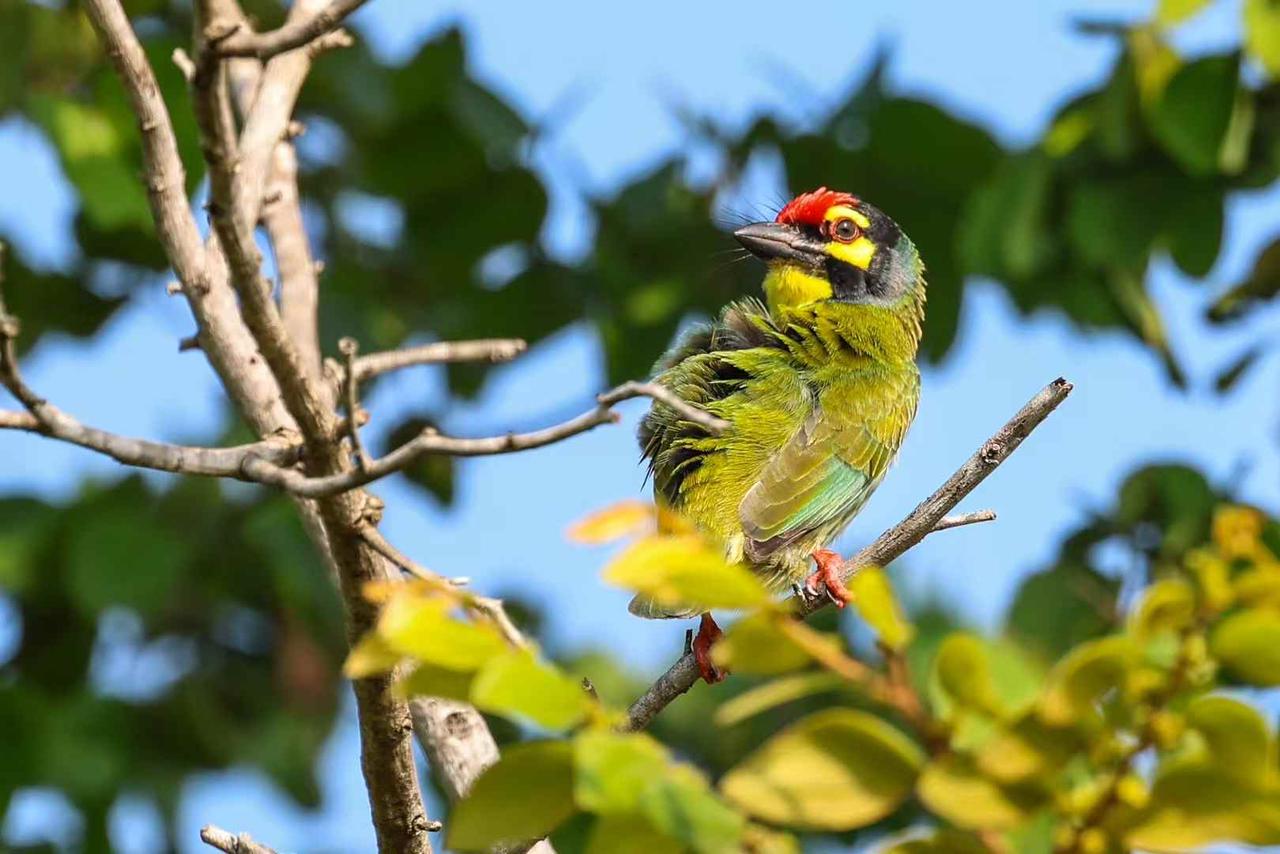
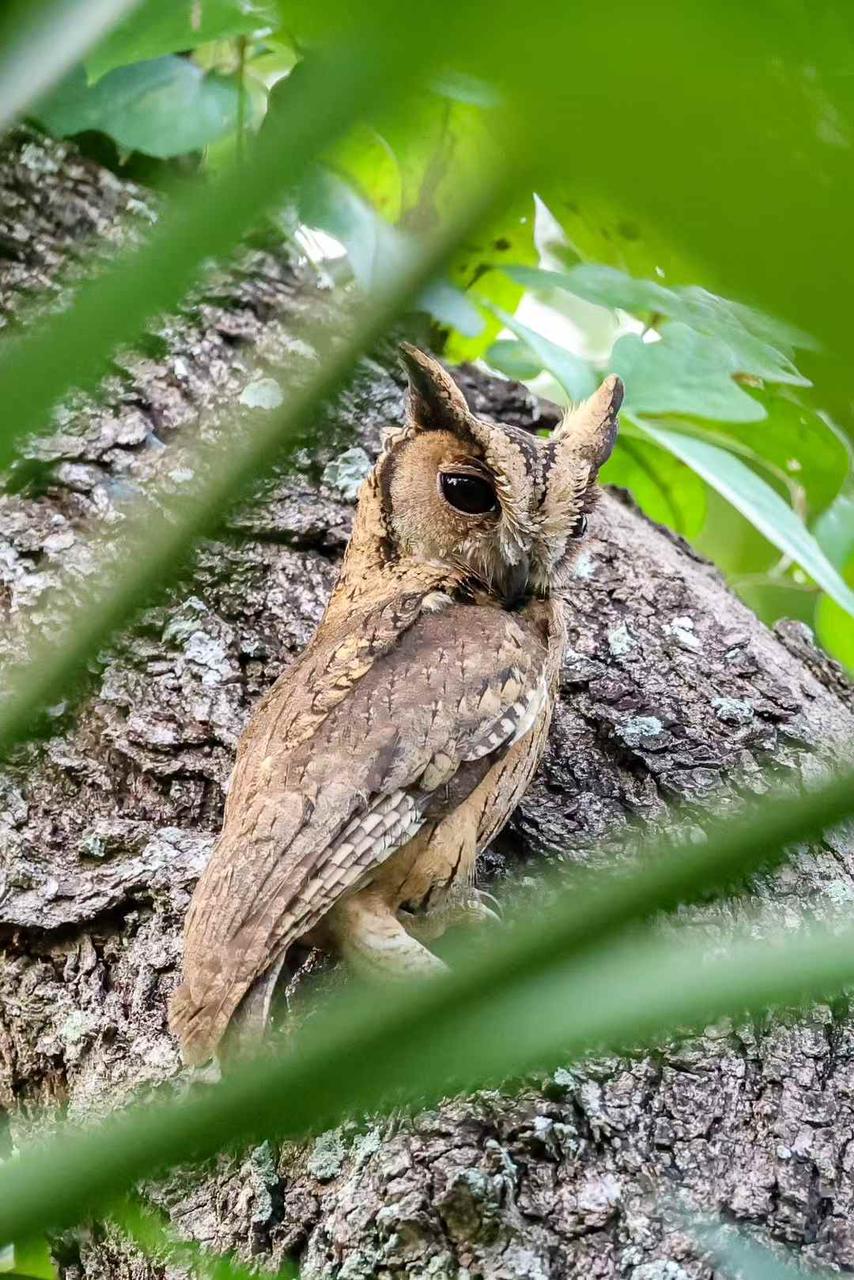
Three small owls share the same Tissamaharama gardens. Once you learn their calls you start hearing them everywhere.
There is a particular kind of magic to walking out of the guesthouse after dinner with a torch and a thermos. The south-coast night is warm, full of cicadas, and three of our local owls are calling at any given moment if you know what you are listening for.
The collared scops
The Indian collared scops owl is the small bark-coloured ghost on the cover of this piece. He sleeps tight against a trunk by day, eyes squeezed almost shut, and at night gives a soft, single hoot every ten or fifteen seconds — a metronome you barely notice until you do, and then you cannot stop hearing it.
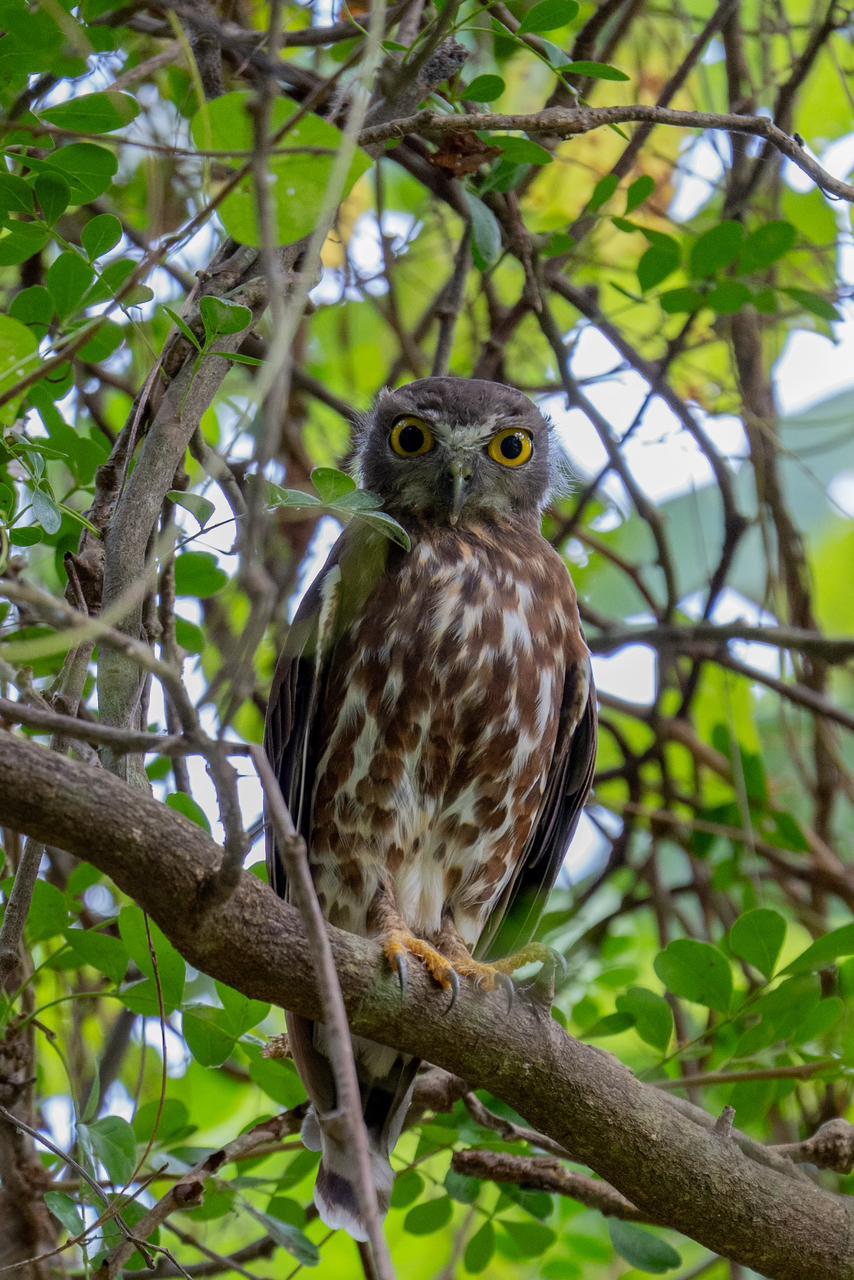
The brown hawk-owl
The brown hawk-owl is bigger, more upright, with those startling yellow eyes that look like he has just heard a rumour about you. He likes the edges of the home gardens, where palmyra meets jak meets a scrap of paddy. His call is a soft, two-note oo-uk, oo-uk repeated for half an hour at a time.
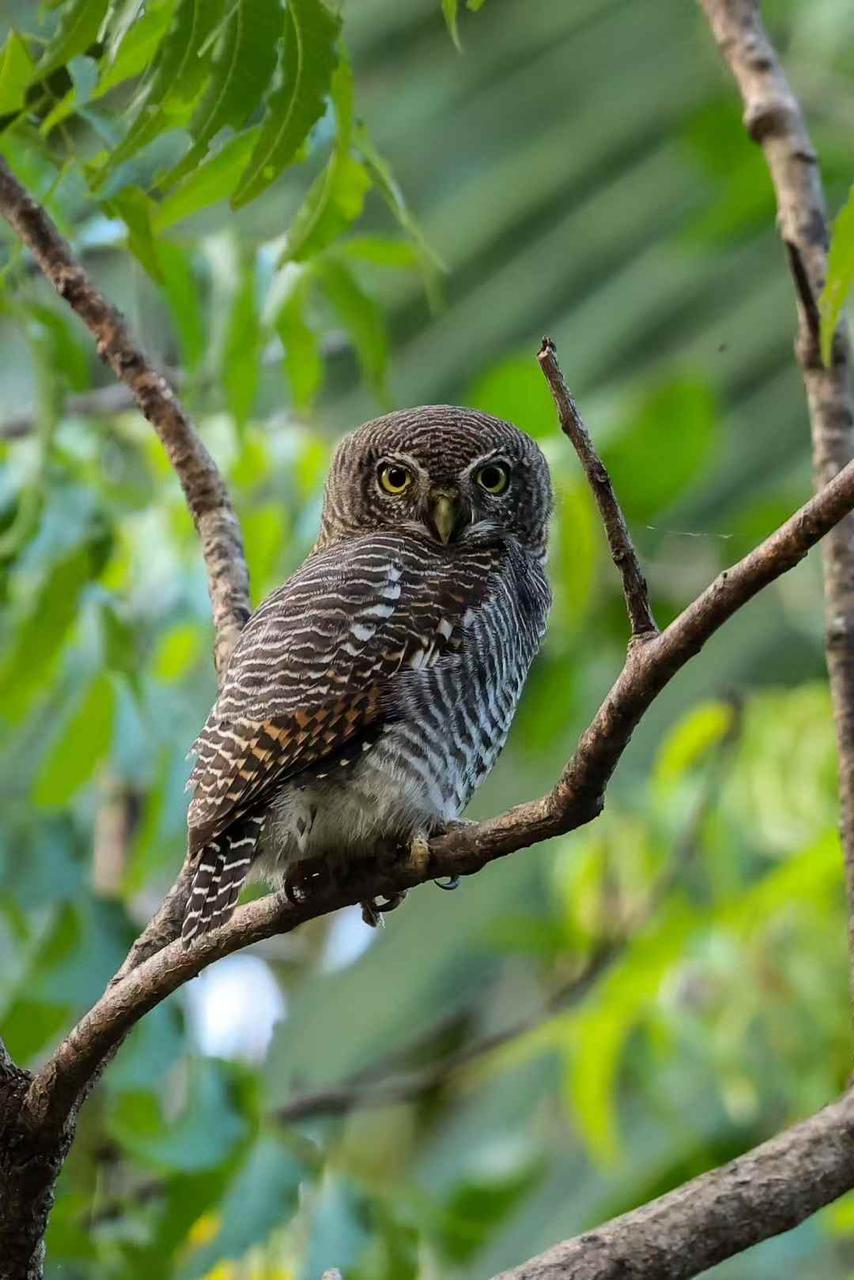
The jungle owlet
The jungle owlet is the only one of the three you have a real chance of seeing in daylight. He sits out in the open in the late afternoon, fluffed up, half-asleep, completely unbothered by tractors and tuk-tuks. His call is a rolling, accelerating cackle — like a small motor that cannot quite catch.
If you join us for an evening walk we will play none of these calls back at the birds. That kind of pressure exhausts them. We just walk slowly, point the torch where it needs to go, and let the dark do the rest.