The two main deer of Yala are not just background scenery — they are the clock the whole park runs on.
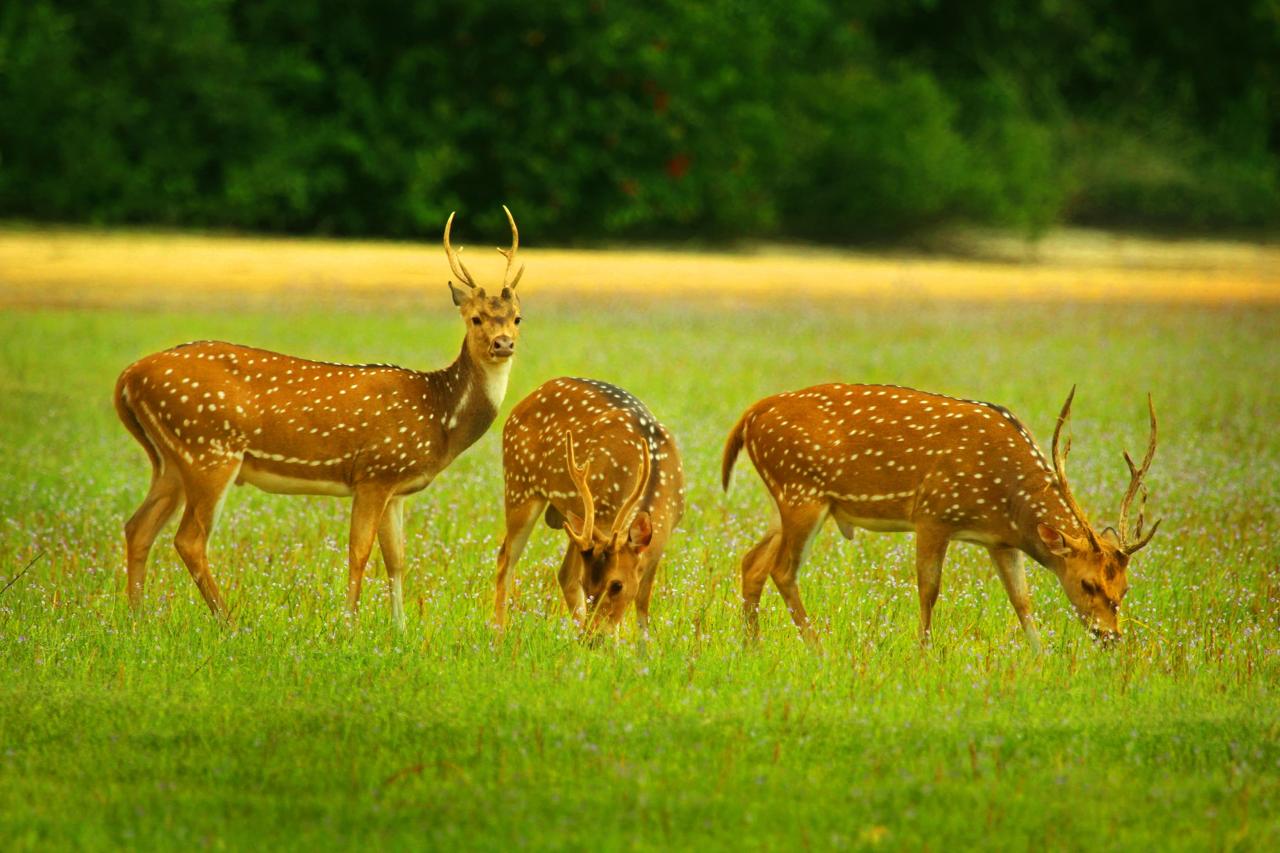
Most safari guests come for the leopards and the elephants and barely register the deer. That is a small mistake. The deer are the engine room of the park — the prey base that feeds the cats, the alarm system that tells you where the predators are, and, on a quiet golden evening in a meadow of purple-flowered weeds, one of the most beautiful sights the dry zone has to offer.
Chital — the spotted deer
The chital, or spotted deer, is the most numerous large mammal in Yala. Herds of forty or fifty are normal. The bucks carry elegant three-tined antlers that they regrow every year; the white spots run from neck to flank and do not fade with age. They are grazers, browsing on grass and low foliage, and they are almost always near water.
If you want to find a leopard, find a herd of chital that has gone completely silent and is all staring in the same direction. That direction is the leopard.
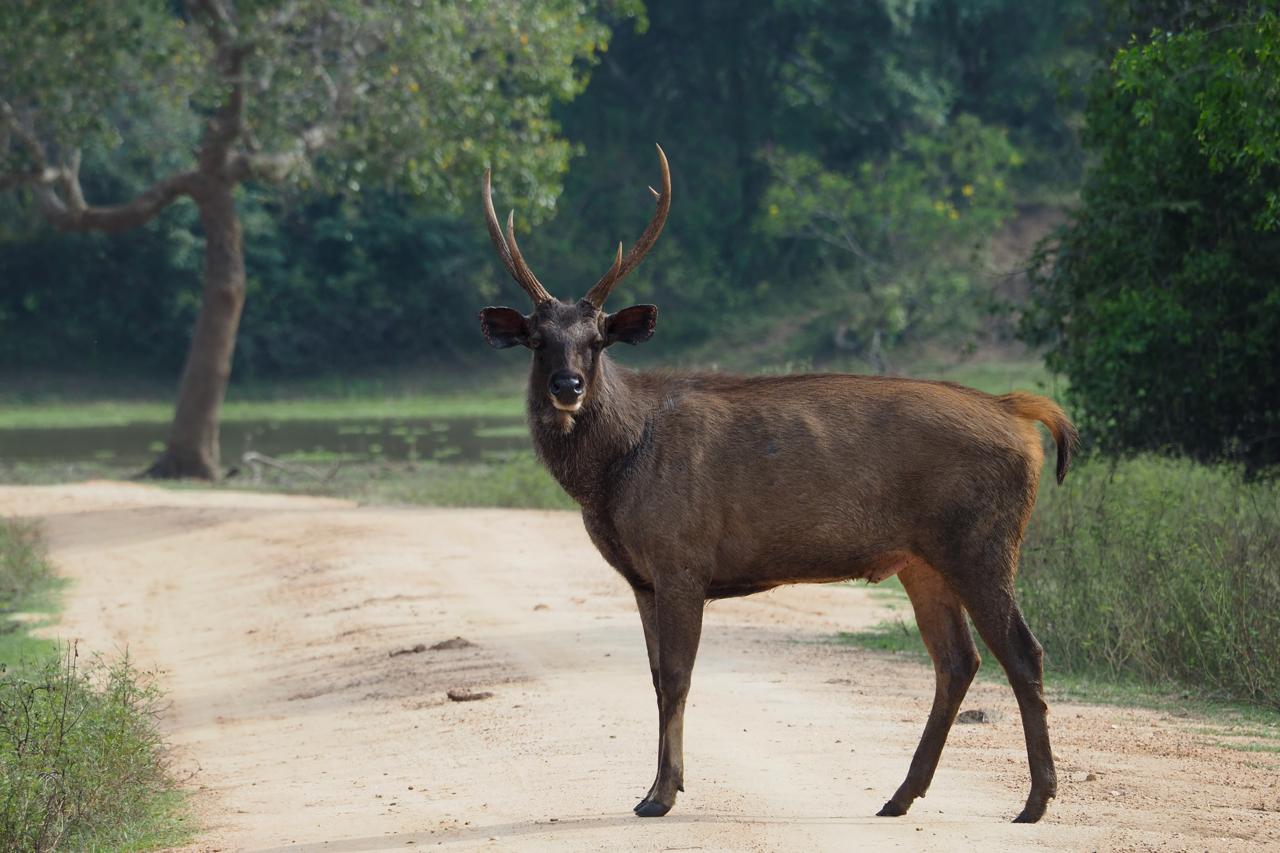
Sambar — the big shy one
The sambar is a different animal entirely. Big, dark, almost moose-like in profile, with heavy three-pronged antlers and a habit of standing very still in shadow. They are mostly crepuscular — active at dawn and dusk — and they prefer forest edge and old reservoir banks to the open meadows the chital favour.
A mature sambar stag in good antler is one of the most underrated sights in Sri Lankan wildlife. Stop the jeep. Turn the engine off. Let him decide whether you are a threat. Nine times out of ten he will simply walk across the road and disappear into the trees, taking his time.
Learn the deer and you learn the park. The cats are just the last few notes of a much longer song.
The third deer — the tiny Indian muntjac, or barking deer — is here too, though you will more often hear his sharp dog-like bark from the undergrowth than see him. Listen for it in the late afternoon. It usually means a leopard is moving.