An elephant crossing the safari track at three metres is not a threat — if you understand the body language and keep the engine off.
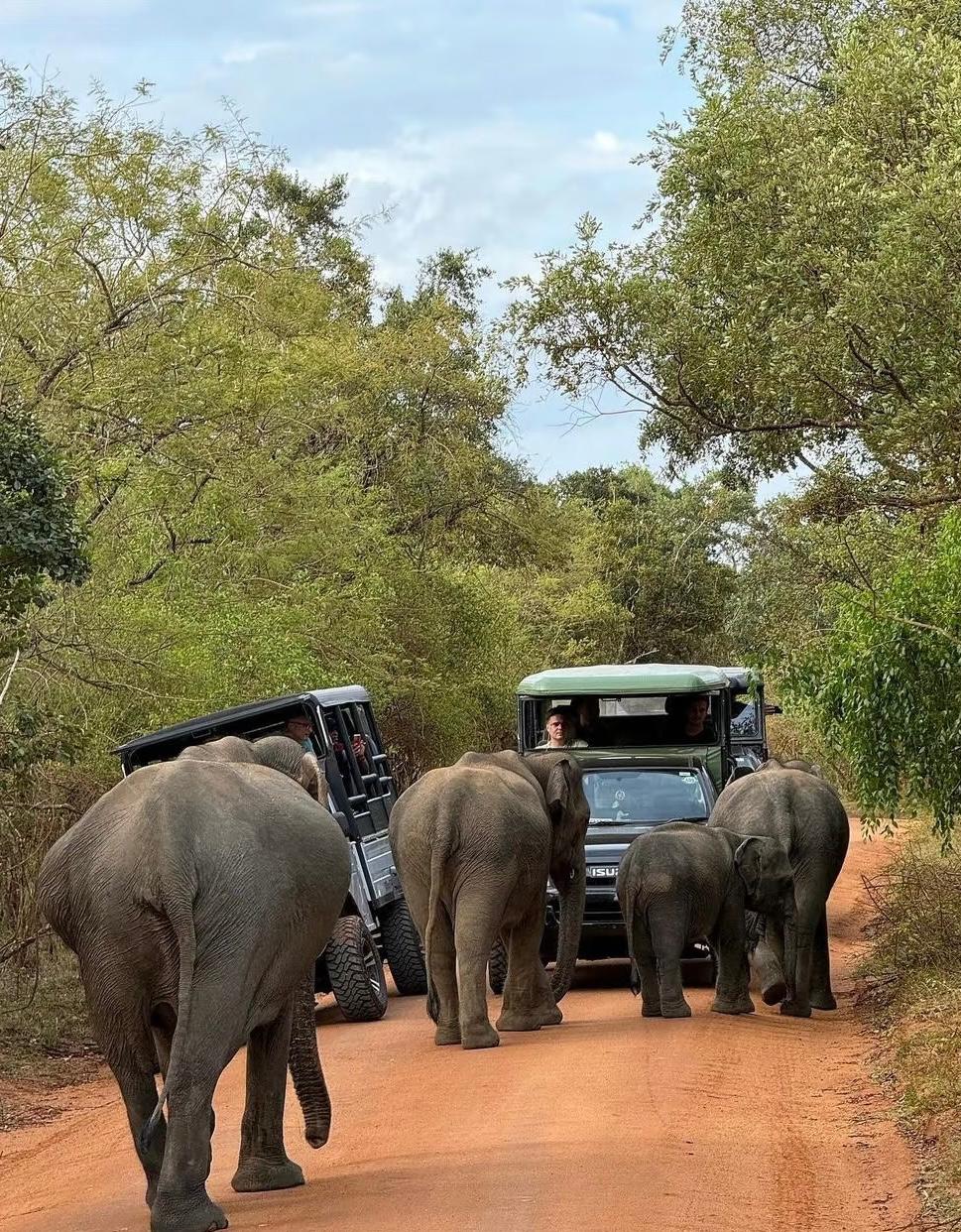
There is a moment on every Sri Lankan safari when an elephant decides to use the road you are sitting on. Not as a confrontation — as a commute. The big matriarch comes out of the scrub thirty metres ahead, the herd follows in single file, and suddenly your jeep is a small obstacle in a much older traffic system.
Done well, this is the safest, most moving wildlife encounter you can have in this country. Done badly — engine revving, guests shouting, driver trying to reverse in a panic — it is dangerous for everyone, especially the elephants.
What the body is telling you
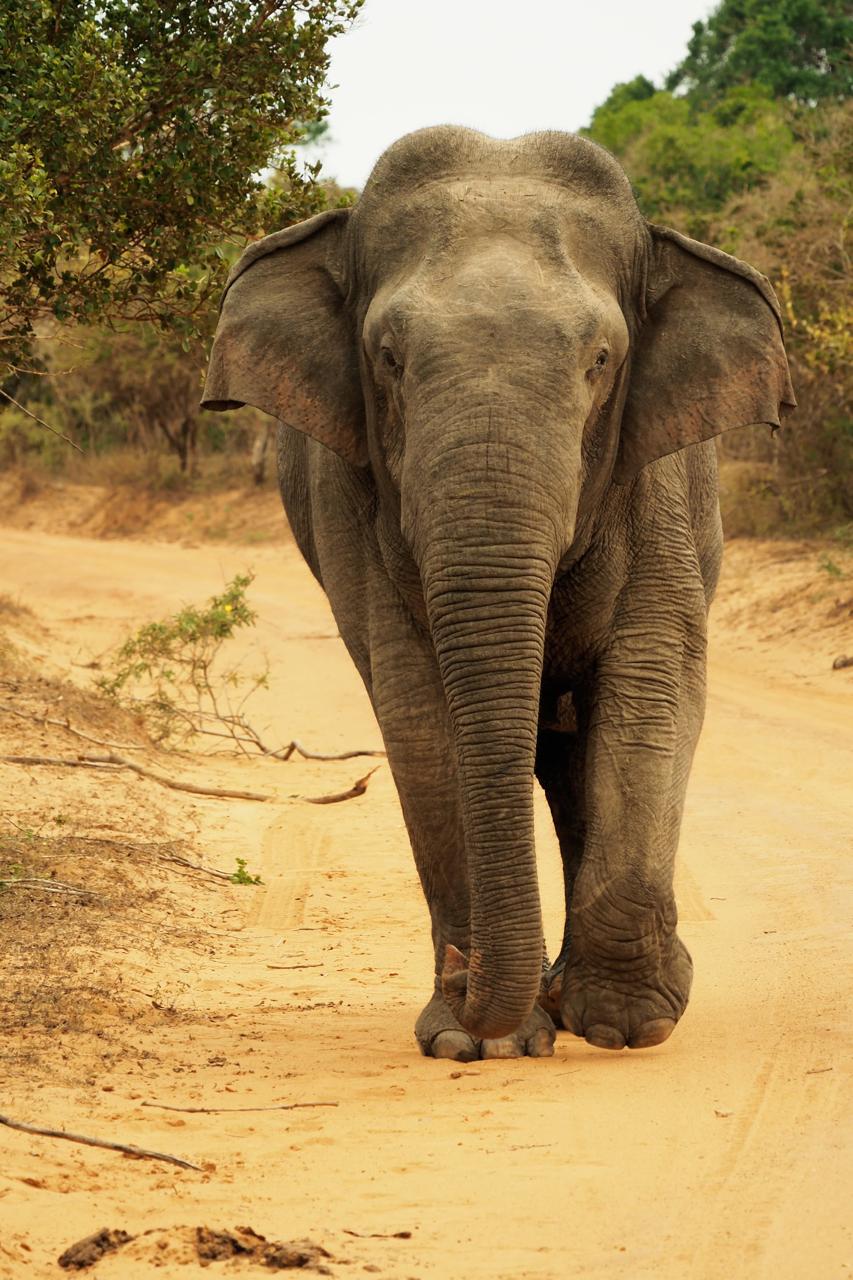
An elephant that is relaxed about your presence walks loose-limbed, ears flapping gently, trunk swinging. Calves stay near the legs of the cows. They will move slowly past you, sometimes pausing to pull a branch down or scratch on a tree, and they will not even look up.
An elephant that is not relaxed will tell you. Ears flare wide and rigid. The trunk lifts and curls back. The head shakes. Sometimes a short, sharp mock-charge of three or four steps. Your job at that moment is to be small and still — not to drive away in a hurry, which only confirms that you are a threat worth chasing.
Why the south is special
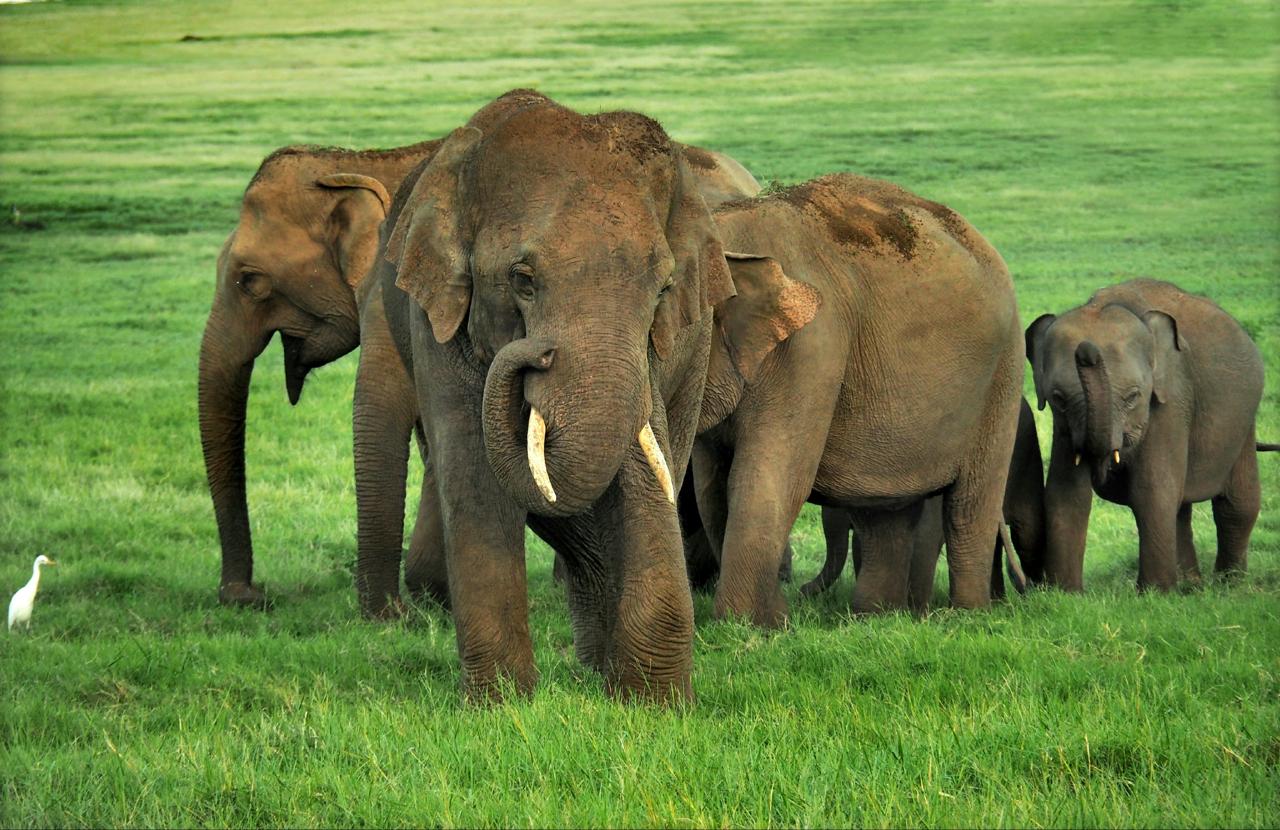
Yala, Bundala and Lunugamvehera are home to several hundred Sri Lankan elephants, a subspecies of the Asian elephant. Only about seven per cent of males carry tusks, which makes a sighting of a true tusker a memorable event. The big bulls drift between parks along old corridors — green ribbons of forest the herds have been using for centuries.
You are a guest on a road that was theirs first. Behave accordingly and they will let you stay.
Our standing rule on the jeep is simple. When elephants are near, engine off. Voices low. No flash, no sudden movement, no leaning out for the perfect shot. Almost every dangerous encounter you read about begins with a driver who broke one of those four rules.