Five woodpecker species share the forest around Tissa. The black-rumped flameback is the loud one — but he is hiding something.
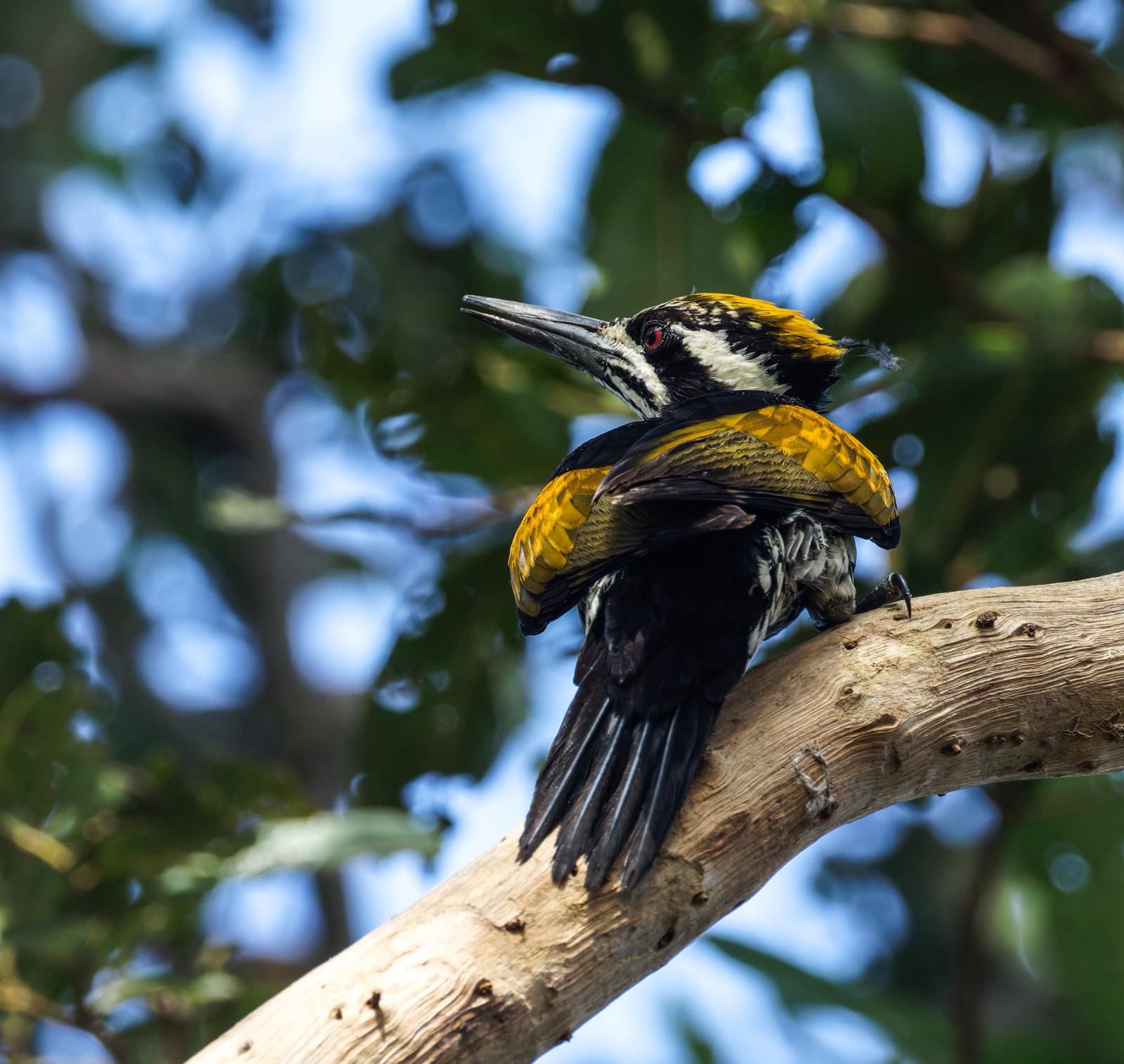
A flameback in good light is one of those birds that makes new birders go quiet. The wings burn gold against the leaf-litter, the crest is a hard scarlet exclamation mark, the white face is striped like a piece of warpaint. He looks far too dramatic for a working bird.
But the black-rumped flameback is, in fact, a serious carpenter. Walk a stretch of dry-zone forest at first light and you will hear him before you see him — a fast, dry roll of taps on a hollow branch, then a sharp single kik-kik-kik as he hitches up the trunk.
What the drumming is for
The drumming is mostly not feeding. It is territorial. A pair will hold a stretch of woodland and drum its boundaries the way other birds sing. The actual feeding — for ants, beetle larvae, the soft white grubs inside rotten wood — is much quieter. A delicate, methodical tap-tap, like someone testing a wall for damp.
Watch the back of the head. Males have a fully red crown and crest; females have a black forehead with white spots and only the rear crest is red. Once you can sex a flameback at thirty metres you have earned a small badge of dry-zone birding.
Other woodpeckers share the same forest — the yellow-fronted pied, the streak-throated, the lesser yellownape, the tiny brown-capped pygmy. Most days you can pick up three of the five on a slow morning walk. Bring binoculars you trust, and listen first.