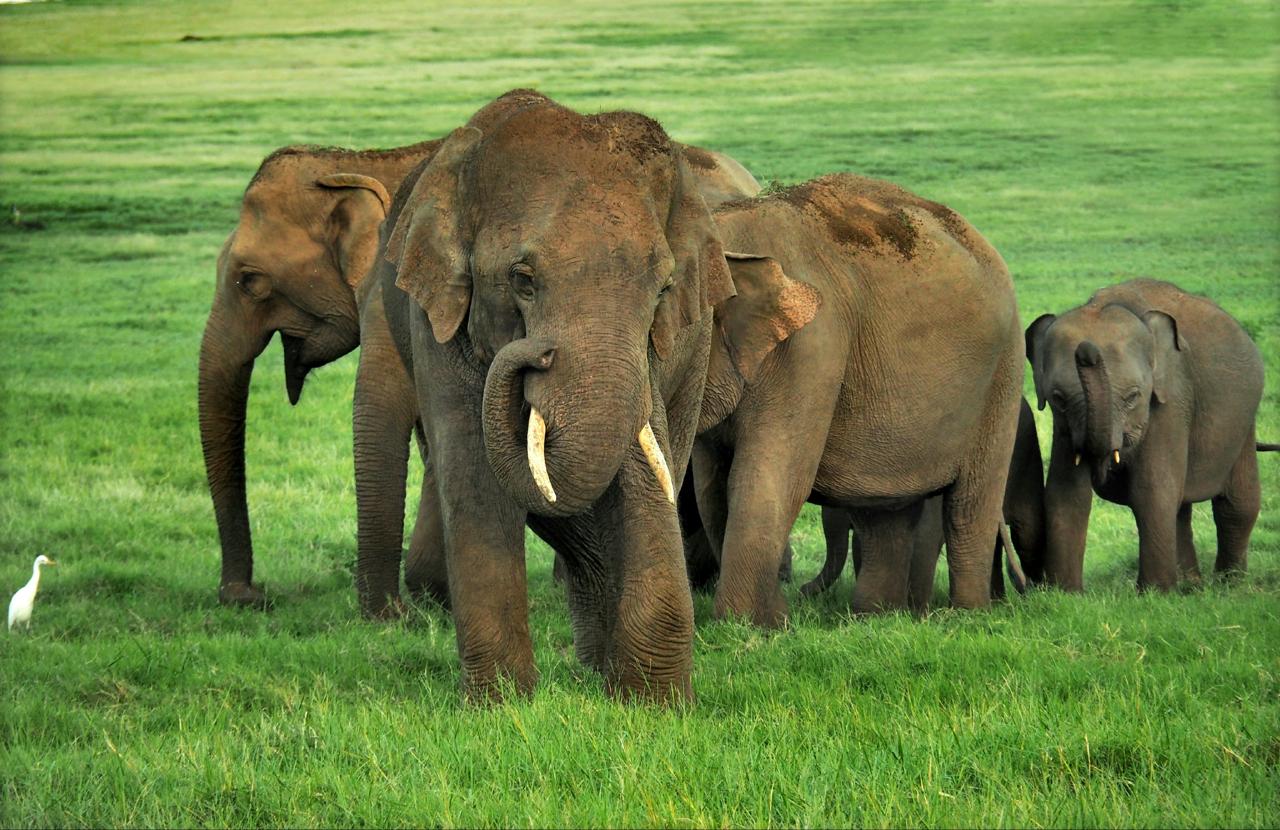
Only a handful of Sri Lankan bulls carry true tusks. Meeting one in Yala or Lunugamvehera is a moment to put the camera down.
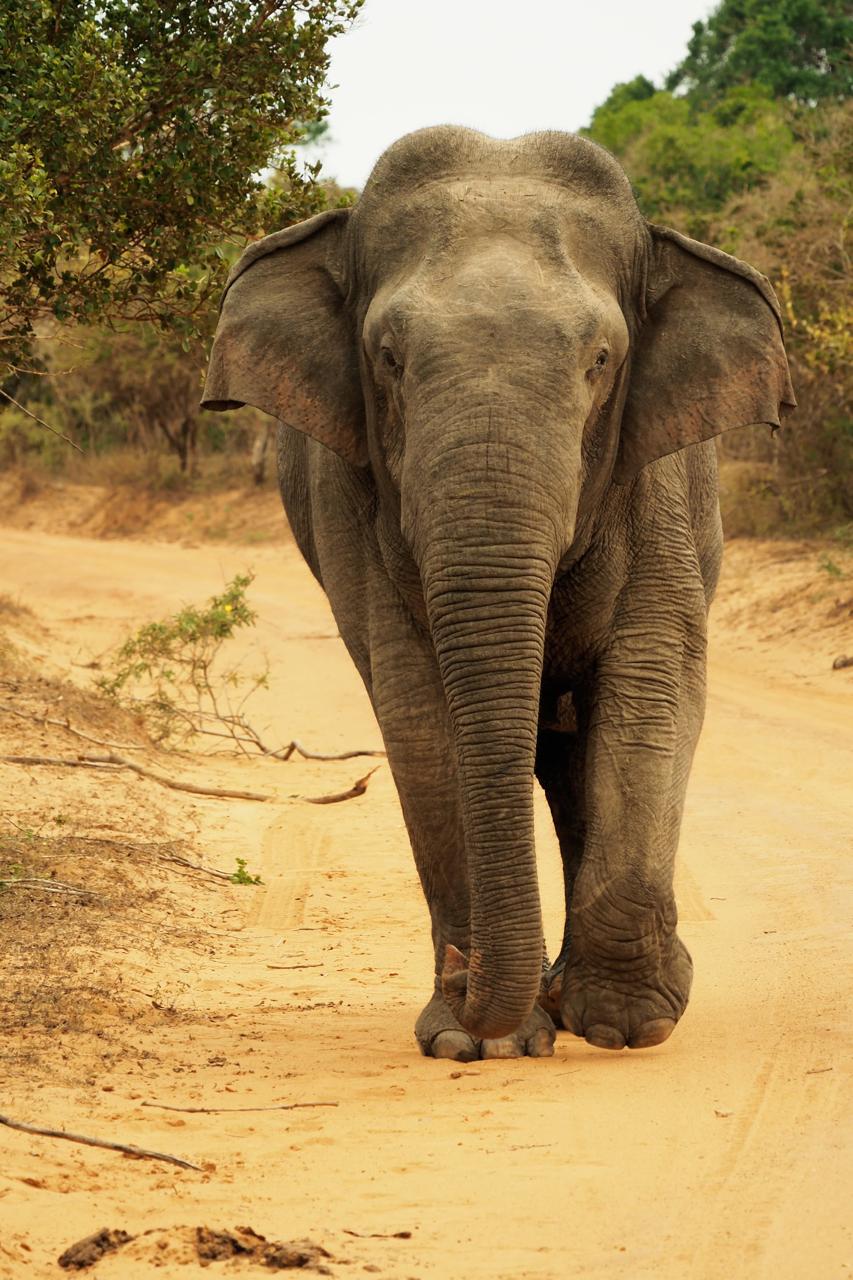
There is a strange and slightly heartbreaking thing about the Sri Lankan elephant: only around seven per cent of males ever grow tusks. The genetic ratio is unusually low, and a century of selective ivory poaching during the colonial era did not help. Most of our big bulls are what guides politely call makhnas — tuskless, magnificent, but missing the silhouette people expect.
Which is why a true tusker in good ivory is something the trackers will radio about in low, careful voices. They do not want a queue of twenty jeeps. They want a few people who will be quiet, sit at a respectful distance, and not stress an animal that has already survived a lot.
How to behave around a bull
A breeding bull in musth is the most dangerous animal in this park, more so than any leopard. You can see it on him — a dark, oily stain running down the temple from the gland behind the eye, a strong, sweet smell that carries on the wind, a slow, swaying walk and a wet trickle from the penis sheath. Give him at least a hundred metres. Better, give him the whole road.
A bull not in musth, walking quietly with a small group, is usually completely unbothered by a respectful jeep at fifteen or twenty metres. Engine off. No talking above a whisper. He will feed past you, scratch his side on a tree, and walk on.
Where to find them
Yala Block 1 has a few resident tuskers. Lunugamvehera, the quieter park between Yala and Udawalawe, is genuinely one of the best places in the country for them — the corridor between the parks is a tusker highway in the dry months. And of course in August and September the great Gathering at Minneriya and Kaudulla brings several hundred elephants onto the receding lake bed, including the famous bulls of the dry-zone interior.
If you are lucky enough to share a road with one of these animals, take one photograph. Then put the camera down and just watch. You will not forget it.